How Many Wedding Dresses Does a Bridal Shop Need?
The planning answer: most bridal shops carry 40–100 sample gowns. Smaller by-appointment studios run lean at 30–40, and large-format stores go well past 100. But the count is the least interesting part of the question. Bridal inventory doesn't work like other retail — you stock one sample per style and order the bride's size after she says yes — so the real questions are what those samples should be, and how to budget the buys that keep the wall current without draining your cash.
Why the sample wall works differently
A sample is a try-on asset, not sellable stock (at least until you eventually mark it down and sell it off the rack — more on that below). That inverts several normal retail instincts.
Breadth beats depth. Two of the same gown adds nothing, while one more silhouette does. Every slot on the wall should earn its place by giving brides something distinct to try.
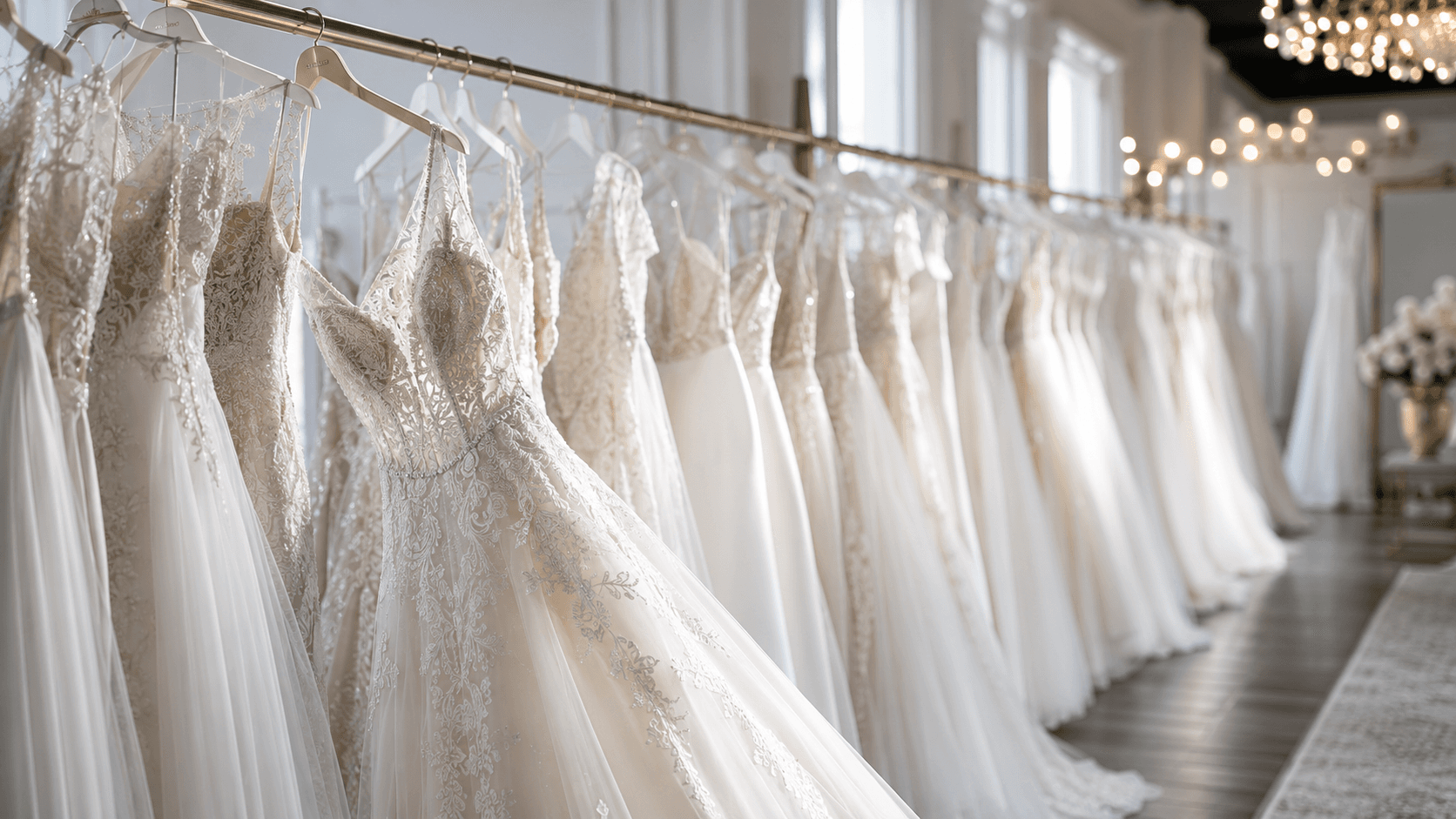
The wall is a curation, not a warehouse. Below roughly 40 samples, brides leave feeling they haven't seen enough. Past a point — for most spaces, somewhere around 100 — you're tying up cash in overlapping styles that compete with each other.
And each sample is real money. Wholesale sample costs vary widely by segment, roughly $500–$1,200 per gown, with a mid-market assortment often averaging around $600–800 (designers frequently discount samples at market, so ask). Even at the low end, the gap between a 60-sample wall and a 90-sample wall is $20,000 or more in cash that might work harder as working capital or marketing.
What the 40–100 should be made of
A useful way to plan the mix, with proportions adjusted to your market:
- Silhouettes. Cover the core shapes — A-line, fit-and-flare, ballgown, sheath/column — with enough options in each that no bride's shape or vision hits a dead end. Within two seasons, your sales records will tell you which silhouettes over- and under-earn their wall space.
- Price points. Cluster most samples around your core price segment, with a few reachable entry points and a few aspirational pieces. A wall priced entirely at your average alienates both edges of your actual traffic.
- Designers. For most shops, roughly 3–6 accounts. Fewer, deeper collections give your shop a point of view and give you leverage with each designer. Many shallow accounts give you minimum-order obligations in every direction.
- Sizes. Samples in a range of sizes are not a nice-to-have. Brides who can't physically try anything on don't buy, so deliberately spreading sample sizes is one of the cheapest conversion improvements available.
The math that keeps buying disciplined: open-to-buy
The classic failure mode in bridal buying isn't buying the wrong gowns. It's buying the right gowns with money the season doesn't justify, usually at market week, where enthusiasm is the sales rep's best friend. The discipline is a hundred-year-old retail formula, with one adjustment for bridal:
Open-to-buy (at retail) = planned sales + planned markdowns + target end-of-season stock − current stock − already on order
In plain English: the inventory your season plan says you'll need, minus what you already have on the floor or arriving. Convert that to a wholesale budget by dividing by your markup (typical bridal runs around 2.6×), then divide by your average sample cost (a $750 wholesale planning figure is common), and you have the number of new samples the season actually supports.
The bridal adjustment is what counts as a sale. Only sales that come out of your stock belong in the formula: off-the-rack gowns and sample sales. A special order is made by the designer for one bride, arrives and leaves, so it never changes what's on your rack. Leave special orders out of planned sales, and their purchase orders out of on-order. For the sample wall, that turns open-to-buy into a replacement plan: the samples you'll retire and mark down, plus any growth you want, minus what's already coming.
Our open-to-buy planner does this math and produces a copyable market-week budget sheet. It will also tell you when the answer is "you're already overbought," which is the answer nobody computes by hand at market. And when a designer or rep offers gowns on consignment instead of wholesale, that's a different decision with its own math — covered in our bridal consignment guide.
The sample lifecycle: buy, work, retire
A well-run wall is a conveyor, not a museum. Each sample goes through three phases:
- Working. It books try-ons and generates special orders. Its job is to sell orders of itself, and your order records tell you whether it does.
- Aging. Somewhere past a year on the floor, most styles slow down. This is where owners lose margin through inaction: the sample neither sells orders nor leaves.
- Retired. Sold off the rack at a markdown to fund its replacement. A common markdown ladder starts around 15% for younger samples and steps toward 50–65% as gowns pass the two- and three-year marks, adjusted for condition. Our sample markdown planner suggests a tag price from age, condition, and style status, and shows what waiting another six months costs you.
The conveyor only works if you can see it: how long each sample has been on the floor, how many orders it generated, what it cost. That's record-keeping, not memory work — it's exactly what inventory tracking in CloudBridal is for, and it's the difference between retiring the right ten gowns and the ten you happen to be tired of looking at.
FAQs
How many wedding dresses should a new bridal shop open with? Most new boutiques open with 40–100 samples. A common mid-market opening buy is 60 gowns at a $700 average wholesale, about $42,000. Opening leaner with a tight curation beats opening wide with filler — you can add from reorders once real demand data arrives. The startup cost guide covers where this fits in the whole budget.
How often should a bridal shop buy new samples? Most shops buy around the major market weeks, typically twice a year, with occasional in-season fills. The cadence matters less than the discipline: run the open-to-buy math before every market, not after.
What markup do bridal shops use? Typical bridal markup runs around 2.3–3× wholesale, with roughly 2.6× a common planning figure. Your effective margin lands lower after markdowns and incentives, which is why planned markdowns appear in the open-to-buy formula rather than showing up as a surprise.
When should a sample gown be marked down? When its order-generating days are behind it — for most styles, somewhere past 12–18 months on the floor. The mistake isn't marking down too early. It's the gown that sits at full sample status for three years and finally leaves at 65% off in worn condition.
Planning a market trip? The open-to-buy planner turns your season plan into a wholesale budget and sample count, and the markdown planner prices the retirements that fund it.